Improving access to island diagnostics Point-of-care testing trialled by paramedics in Orkney and Shetland
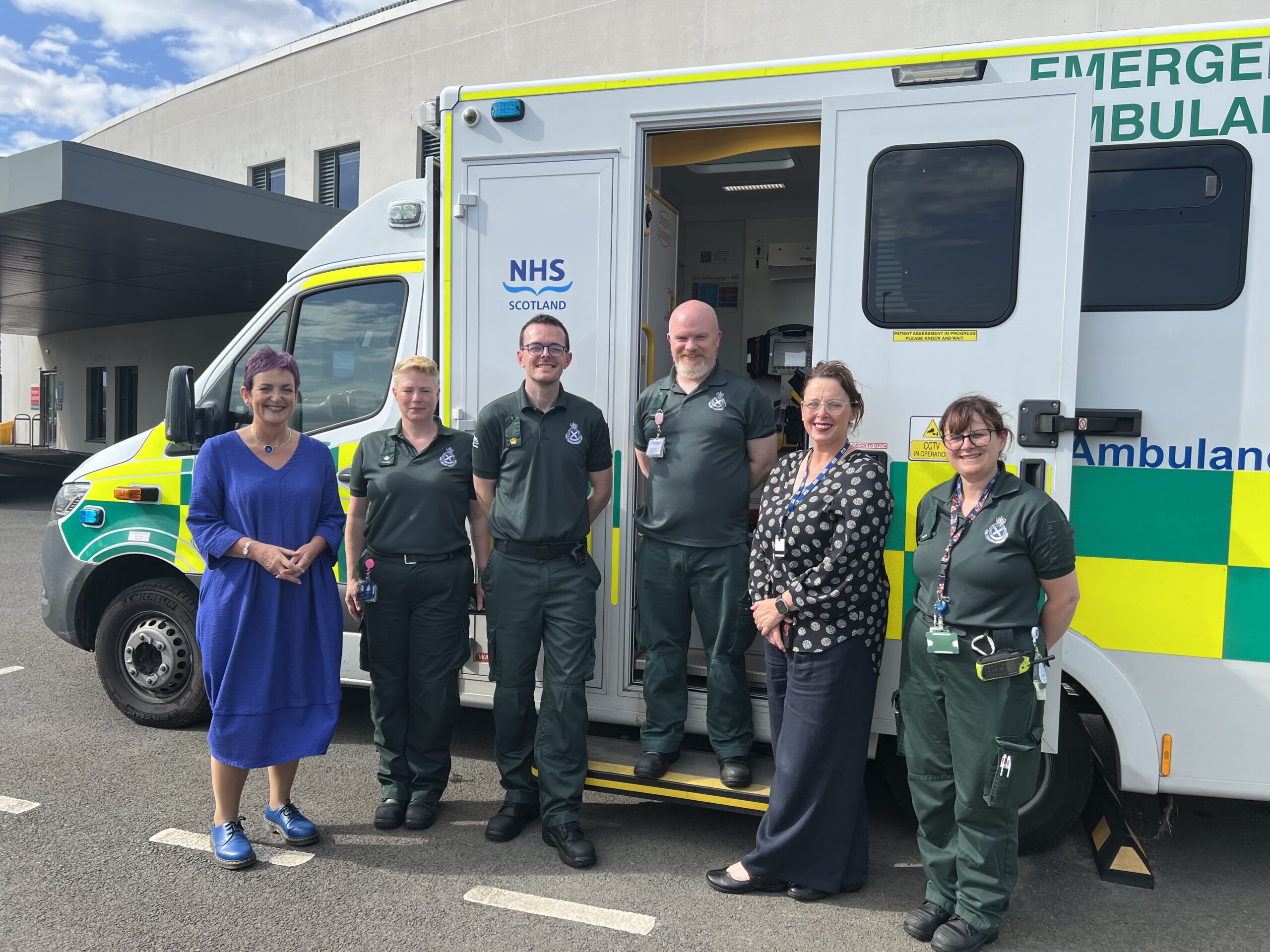
Paramedics in Orkney and Shetland are to be equipped with portable diagnostic devices under a new pilot aimed at cutting unnecessary hospital journeys and helping more islanders receive safe care at home.
Project SOUND will see point-of-care testing technology introduced into Orkney and Shetland, allowing paramedics to carry out a range of rapid tests, that would traditionally require hospital admission, to support the assessment of a range of common and serious health conditions closer to the patient.
Currently, up to 77% of ambulance callouts in the islands result in a hospital transfer, including 86% of patients with chest pain and 77% of those with breathing difficulties. Many of these patients could be safely treated and monitored at home if paramedics had faster access to test results.
The handheld devices will give results within minutes, meaning paramedics can make a more confident call about whether someone needs to go to hospital or can be safely treated and monitored at home, before or instead of transferring patients to hospital.
The 21-month pilot project is backed by funding from the Scottish Government through the National Islands Plan 2026.
Health Secretary Angela Constance said: “Wherever you live on our islands, you should be able to access the care and support you need to stay healthy.
“That’s why we’re backing this trial of rapid diagnostic testing directly to patients in Shetland and Orkney, giving paramedics the tools they need to make faster, safer decisions on the spot.
“This means fewer unnecessary journeys, less pressure on our ambulance services, and more people able to stay safely at home surrounded by their families. It’s a brilliant example of Scotland using innovation to close the gap between island and mainland healthcare, and I’m confident the lessons learned here will benefit rural and remote communities right across the country.”
Dr Adam Lloyd, Head of Research and Innovation at the Scottish Ambulance Service, said: “Project SOUND is an exciting opportunity to trial how we improve the care we provide to patients in some of Scotland’s most remote and rural communities.
“By equipping our paramedics with point-of-care testing technology, we can support faster clinical decision-making, helping more patients receive the right care in the right place, while reducing unnecessary journeys to hospital where it is safe to do so.
“We look forward to seeing the positive impact it can have for patients, staff and island communities.”
Dr Anna Lamont, Medical Director for NHS Orkney, said: “Project SOUND is in its early stages, and is a great example of how remote and rural services can come together to test innovative ways of working to the benefit of their communities. The ability to complete blood tests, in a person’s own home, is a new and exciting opportunity that will help us make smarter care decisions at the most urgent of times. Both when it is safe to stay at home, and when someone really must be transferred.”
Anthony McDavitt, Director of Pharmacy and Interim Depute Chief Officer for NHS Shetland, said: “In Shetland, urgent care relies on strong links between our remote island health centres’ 24/7 on-call services, the Scottish Ambulance Service and the Gilbert Bain Hospital. Geography, weather and transport can all affect how quickly patients can access hospital-based diagnostics.
“Project SOUND will allow us to test whether point-of-care diagnostics in remote community settings can support faster clinical decisions and help more people to be managed as close to home as possible where it is safe to do so.
“Working with NHS Orkney, the Scottish Ambulance Service and the North of Scotland Innovation Hub, this pilot will help us understand how this model could improve urgent care for island communities and reduce unnecessary travel by treating people effectively close to home.”